
Rethinking STEM Instruction: Expanding Educator and Student Access Through Integrated STEAM
The Hidden Constraint in STEM Education
For years, efforts to expand STEM education have focused on increasing rigor, improving curriculum, and encouraging more students to pursue science and technical fields. Yet one critical constraint is often overlooked. Who can teach STEM, and at what scale?
Traditional STEM instruction frequently depends on educators with strong subject-matter expertise in mathematics, science, or engineering. While this ensures depth of knowledge, it also creates a structural limitation.
Not every school has access to highly specialized STEM educators. Not every teacher has the background, or the time, to develop advanced technical expertise across multiple disciplines.
As a result, STEM opportunities often remain concentrated in select programs, advanced tracks, or well-resourced schools.
Limited Access, Uneven Opportunity
This model produces a predictable outcome. A small group of students receives high-quality STEM exposure as many capable students are left without meaningful participation. As a result, educational opportunity becomes uneven across schools and communities.
Importantly, this does not reflect less student ability, it reflects shortcomings in system design.
A Shift in Perspective
Integrated STEAM introduces a different approach. Rather than requiring educators to be subject-matter specialists across all STEM domains, our program provides structured, real-world learning frameworks that allow teachers to guide students through applied problem-solving.
This is a shift from content-first instruction methods of teaching then applying theory, to application-first learning that engages real-world problems to build understanding.
From Specialist Instruction to Guided Learning
In an Integrated STEAM environment, the role of the teacher evolves. Instead of acting solely as a lecturer delivering advanced technical content, the educator becomes a facilitator of learning, a guide through structured problem-solving, and a coordinator of collaborative activity.
This does not reduce the importance of subject knowledge. It changes how that knowledge is delivered and developed.
Students still learn science, technology, engineering, and mathematics, but they do so within a context that emphasizes application, systems thinking, communication, and teamwork.
Lowering Barriers Without Lowering Standards
A common concern is that expanding access might dilute academic rigor, but Integrated STEAM does not lower expectations. It lowers the barrier to delivering high-quality instruction.
By providing structured modules, real-world scenarios, and guided frameworks, Integrated STEAM enables more educators to participate in STEM-related teaching while maintaining a focus on critical thinking, problem-solving, and practical competence.
Why This Matters
This shift has important implications.
Scalability. More educators can deliver meaningful STEAM instruction, increasing the number of students reached.
Equity. Opportunities are no longer limited to specialized programs or high-resource environments.
Workforce Development. Students gain exposure not only to technical concepts, but to how those concepts function in real-world systems to better prepare them for careers.
Educational Relevance. Learning becomes connected to real-world application, increasing engagement and retention.
A System Designed for Access
Integrated STEAM is not simply an instructional method. It is a structural response to a systemic challenge.
By enabling more educators to participate and more students to engage, the reach of STEAM education is expanded without compromising its purpose.
Conclusion
The future of STEAM education is not defined solely by how deeply we teach a small group of students. It is defined by how effectively we can expand access to meaningful learning opportunities for all students.
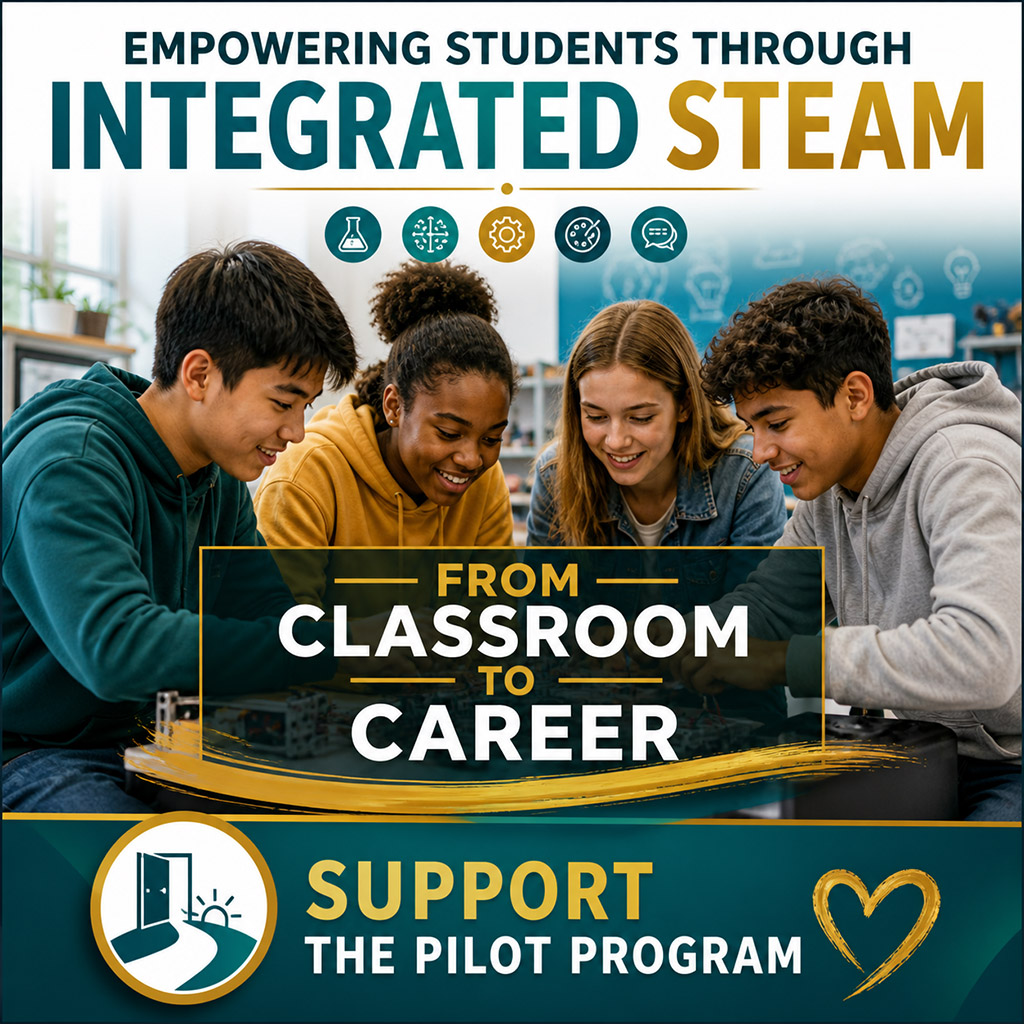
Integrated STEAM offers a pathway forward. One that connects education to real-world application, supports educators, and opens doors for the next generation.