
Career Pathways
Regulatory and Operations Roles
Regulatory and operations professionals ensure that products, processes, and organizations operate within defined legal, ethical, and performance standards. They work at the intersection of science, policy, quality systems, and business operations.
In regulated industries, innovation does not move forward without regulatory alignment and operational coordination. These roles translate technical work into compliant, sustainable practice.
Integrated STEAM introduces students to regulatory awareness and operational systems thinking early — preparing them to contribute effectively within structured environments.

Regulatory professional at work. Image by startupstockphotos / Pixabay
What Do Regulatory and Operations Professionals Do?
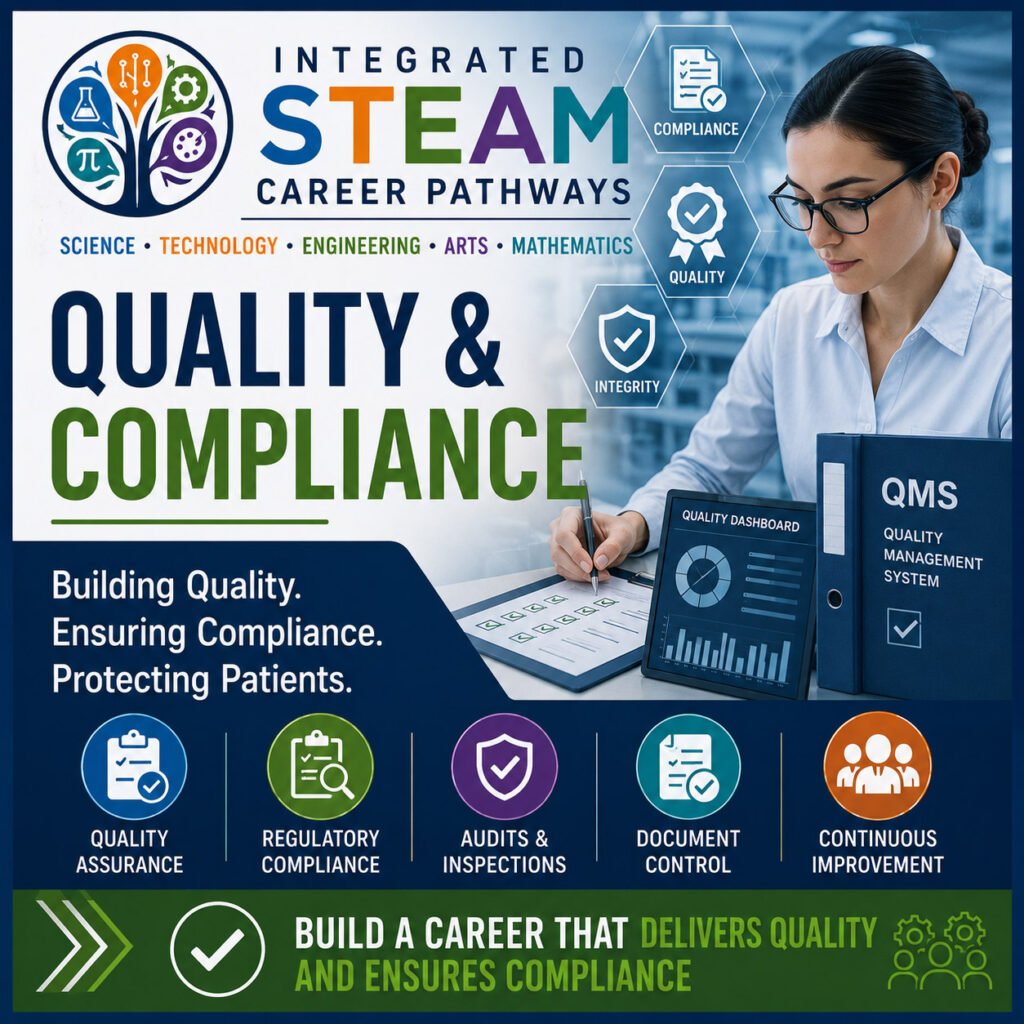
Regulatory and operations roles focus on interpreting regulatory requirements, supporting product lifecycle documentation, coordinating cross-functional teams, maintaining submission records and compliance files, monitoring regulatory changes, supporting inspections and audits, and aligning internal processes with external standards.
These professionals help organizations navigate complex requirements while maintaining efficiency and accountability.
Entry-Level Roles
Students entering this pathway may pursue positions such as Regulatory Affairs Associate, Regulatory Operations Specialist, Compliance Coordinator, Technical Documentation Specialist, Clinical Documentation Support, Operations Analyst, and Project Coordination Support.
These roles often require strong communication skills, documentation precision, and systems awareness.
Core Competencies Developed Through Integrated STEAM
Integrated STEAM aligns foundational STEM knowledge with regulatory and operational competencies to prepare students to operate within highly regulated and highly coordinated environments.
Regulatory Literacy
Understanding how laws, guidance documents, and standards shape industry practice.
Lifecycle Thinking
Recognizing how design, production, distribution, and post-market activities connect.
Documentation Systems
Maintaining structured records that demonstrate compliance and traceability.
Cross-Functional Communication
Working effectively between engineering, manufacturing, quality, and leadership teams.
Risk and Governance Awareness
Understanding accountability, oversight, and structured decision-making.
Why Regulatory and Operations Roles Matter
In sectors such as medical devices, pharmaceuticals, biotechnology, aerospace, and advanced manufacturing, regulatory alignment is mission critical.
Without regulatory coordination, products cannot enter markets, inspections can disrupt operations, compliance failures can create legal and financial risk, and public trust can erode.
Regulatory and operations professionals protect organizational integrity while enabling innovation.
Career Growth and Advancement
Regulatory and operations roles provide pathways into leadership and strategic oversight.
Career progression may include advancements to higher-level positions like Senior Regulatory Affairs Specialist, Regulatory Manager, Director of Regulatory Affairs, Operations Manager, Compliance Director, and Policy or Standards Advisor.
These pathways often involve advanced education, specialized training, and increasing responsibility.
Industry Applications
Regulatory and operations expertise is essential in medical device manufacturing, pharmaceutical production, biotechnology, healthcare technology, aerospace and defense, and energy and advanced materials.
As global regulations evolve, demand for professionals who can bridge technical and policy domains continues to grow.
The Integrated STEAM Advantage
Integrated STEAM introduces regulatory awareness before students enter the workforce. Rather than encountering compliance requirements as an afterthought, students understand early that science operates within structured systems, documentation supports accountability, and governance and innovation must coexist.
This early exposure strengthens workforce readiness and supports long-term professional advancement.
Integrated STEAM prepares students not only to build products, but to build them responsibly.